
Teacher's Power of Expression under the Headship with Distributive Justice: A comparative study of Junior and Senior Special Education Teachers
DOI:
https://doi.org/10.62019/pccq0r65Keywords:
Teachers, Distributivr justiceAbstract
ABSTRACT
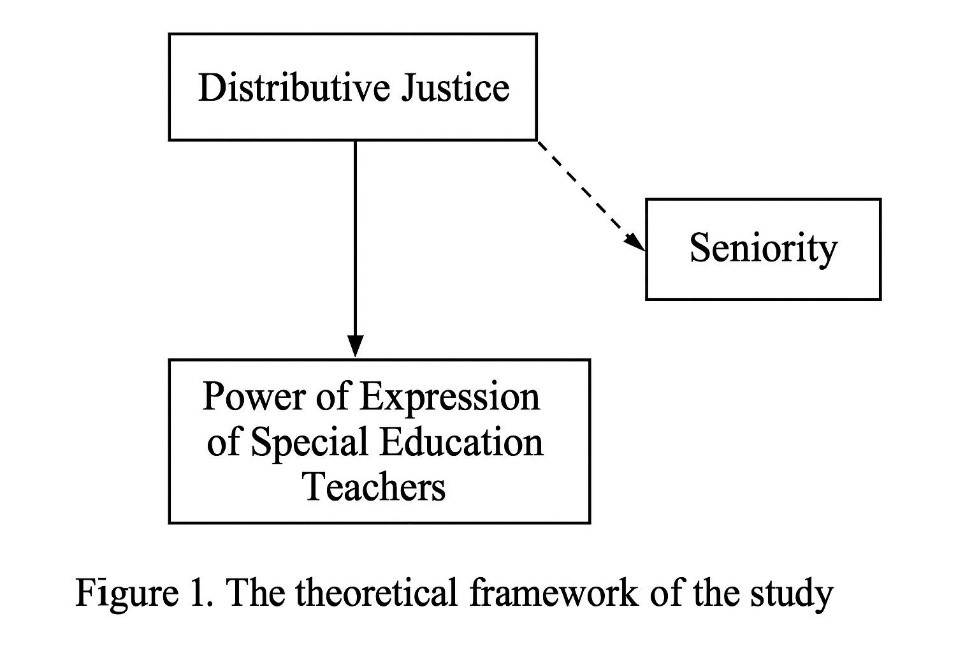
The study aimed to examine the power of expression of the junior and senior special education teachers under the headship with distributive justice in special education institutions. Distributive justice has been considered as one of the key element of organizational justice that emphasizes on the fair distribution of resources, tasks and rewards within institutions. The power of expression is the influence of teachers to demonstrate their professional opinions, to participate in the school decision making, and to discuss with the administration and other teachers. The study employed a quantitative comparative research design and the researchers gathered data of 200 special education teachers in Punjab in Pakistan. The modified standardized measures were in accordance with the scale of Distributive and Procedural Justice and Teacher Performance Evaluation Scale. To obtain the statistical outputs, such as descriptive statistics, independent samples t-test, and regression analysis, the SPSS (v25) was used. The results showed that distributive justice is important in enhancing the expressive capacity of the teachers where senior teachers exhibited a high expressive capacity than junior ones. The findings emphasize the importance of an open and equitable leadership that helps to promote teacher communication and empowerment.
References
Babunaidoo, P. V., & Hamid, A. H. A. (2021). Study on the relationship between the ethical leadership of headmasters and the job satisfaction of special remedial teachers in the Hulu Langat District. KW Publications.
Barber, D. B. (2001). A comparative study of stress and burnout among and between special education administrators and elementary school principals in Northern California. ProQuest Dissertations Publishing.
https://search.proquest.com/openview/d866af8d3189ac72c1742992ede3d614/1?pq-origsite=gscholar
Benons, A. (2020). High school principals' behaviors in Title I and non-Title I schools that retain special educators – A comparative case study. ProQuest Dissertations Publishing.
https://search.proquest.com/openview/3e0e4398259db68bbd95f8f78efee7b7/1?pq-origsite=gscholar
Bogotch, I., & Shields, C. M. (2014). International handbook of educational leadership and social (in)justice. Springer. DOI: https://doi.org/10.1007/978-94-007-6555-9
http://ndl.ethernet.edu.et/bitstream/123456789/39125/1/503.Ira%20Bogotch.pdf
Colquitt, J. A. (2001). On the dimensionality of organizational justice: A construct validation of a measure. Journal of Applied Psychology, 86(3), 386–400. DOI: https://doi.org/10.1037//0021-9010.86.3.386
https://doi.org/10.1037/0021-9010.86.3.386 DOI: https://doi.org/10.1037/0021-9010.86.3.386
Costello, A. J. (2020). Stories of female special school headteachers and their experience of headship. ProQuest Dissertations Publishing.
https://search.proquest.com/openview/1a303c314cc47c28f3a47a2a4a71a701/1?pq-origsite=gscholar
Forde, C., & Torrance, D. (2017). Social justice and leadership development. Professional Development in Education, 43(1), 106–121. DOI: https://doi.org/10.1080/19415257.2015.1131733
Fouki, L. V. (2022). A comparative multi-case study investigating leadership for inclusion and social justice through collaborative professionalism in two primary mainstream schools.
https://www.academia.edu/download/108817008/Lito_FINAL.pdf
Hangartner, J., & Svaton, C. J. (2022). Distributed leadership, teacher autonomy, and power relations between headteachers and teachers under low-stakes accountability conditions: An ethnographic study. Research in Educational Administration & Leadership, 7(3), 501–525. DOI: https://doi.org/10.30828/real.1063609
https://dergipark.org.tr/en/download/article-file/2215175
Jefferys, C. (2022). The social justice agency of secondary school headteachers. London Metropolitan University Repository.
https://repository.londonmet.ac.uk/8395/1/Jefferys-Christine_11.10.2022.pdf
King, F., Forde, C., Razzaq, J., & Torrance, D. (2019). Systems of education governance and cultures of justice in Ireland, Scotland, and Pakistan. In Cultures of Social Justice Leadership (pp. 67–90). Springer. DOI: https://doi.org/10.1007/978-3-030-10874-8_4
https://doras.dcu.ie/24453/1/460947_1_En_4_Chapter_Author.pdf
Kline, P. (2011). The handbook of psychological testing (2nd ed.). Routledge.
https://doi.org/10.4324/9780203428418
Liasidou, A., & Antoniou, A. (2015). Head teachers’ leadership for social justice and inclusion. School Leadership & Management, 35(1), 21–36.
https://doi.org/10.1080/13632434.2015.1010499 DOI: https://doi.org/10.1080/13632434.2015.1010499
Naicker, S. R., & Mestry, R. (2013). Teachers’ reflections on distributive leadership in public primary schools in Soweto. South African Journal of Education, 33(1), 1–15. DOI: https://doi.org/10.15700/saje.v33n2a715
https://journals.co.za/doi/10.10520/EJC129307
Nunnally, J. C. (1978). Psychometric theory (2nd ed.). McGraw-Hill.
https://psycnet.apa.org/record/1979-03688-000
Oplatka, I., & Arar, K. (2017). From social justice leadership to responsible leadership. Emerald Publishing.
https://doi.org/10.1108/S1479-366020170000031002
Torrance, D. (2012). Distributed leadership in Scottish primary schools: Myth or actualities? University of Edinburgh.
https://era.ed.ac.uk/bitstream/handle/1842/7549/Torrance2012.pdf?sequence=7&isAllowed=y
Torrance, D., Forde, C., & Harvie, J. (2025). Conducting comparative analyses of social justice leadership: Creating an international research team from diverse contexts. Equity in Education & Society, 4(1). DOI: https://doi.org/10.1177/27526461231194788
https://journals.sagepub.com/doi/pdf/10.1177/27526461231194788
Zongqing, C., & Muyunda, G. (2023). Effective practices in inclusive and special needs education in China. International Journal of Social Learning, 3(2), 87–102.
https://ijsl.pubmedia.id/index.php/ijsl/article/download/181/82
Zuberi, T., Seni, A. J., & Sungwa, R. (2025). Understanding perceptions of teachers and pupils towards corporal punishment for pupils with disabilities in primary schools in Tanzania: Implications for the promotion of social justice in education. International Journal of Educational Research. DOI: https://doi.org/10.31949/ijeir.v4i1.11093
Downloads
Published
Issue
Section
License
Copyright (c) 2025 Saud Ur Rehman Khan, Shehzad Ahmed, Muhammad Tahir Khan Farooqi

This work is licensed under a Creative Commons Attribution-NonCommercial-NoDerivatives 4.0 International License.
How to Cite


