
AI and Machine Learning Assisted Customer Aware Queries: A Comprehensive Analysis to improve User experience based on Natural Language Processing (NLP), Databricks, and Oracle APEX
DOI:
https://doi.org/10.62019/mxa74q07Keywords:
Sentiment analysis, emotion recognition, sarcasm detection, explainable NLP, rationalization, transformers, and large language models, BERT, GPT, text classificationAbstract
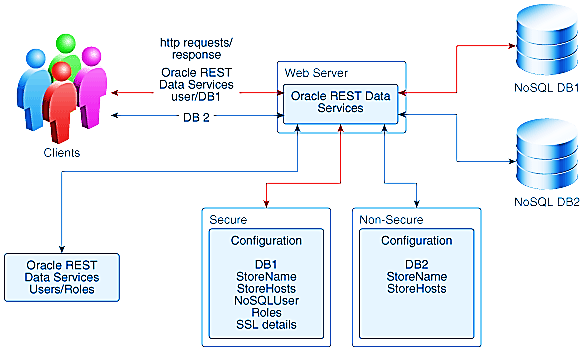
The customer sentiments are extremely significant to a business, where as positive or negative feedback may influence the sales and uptake of the product in the market and ultimately justify the success of the product in the market. The monthly active users of the major social media sites like Facebook are 2.32 billion monthly active users (MAU) and Twitter 126 million; therefore, the market in learning about the customer mood using social media may be a game changer to a company and may be instrumental in determining the success of the company in the future. Failure to capture the emotions of the users properly may translate to disastrous product failure and loss of the company's reputation of the company. The current systems entail a lot of manual processes like customer surveys, compiling the sentiments and creating Excel reports that are not quite interactive and take a significant amount of time to compile the findings. This research addresses the critical need within the telecom industry for a scalable and real-time framework that classifies customer feedback sentiment in order to help improve service quality and reduce churn. The analysis of hundreds of thousands of unstructured customer reviews collected via Web forms using tools such as Oracle APEX is performed inefficiently using traditional methods. The core challenge is the seamless integration of powerful ML models developed in scalable environments-Databricks-with an existing transactional Oracle Database 19c infrastructure, without compromising system performance or security. The article explore an AI Assisted Customer Aware Analysis to improve User experience based on Natural Language Processing (NLP), Databricks, and Oracle APEX in depth for this a new Sentiment Aware Framework is proposed and will be developed to address this integration gap. The framework design involves using Databricks Machine Learning tools in creating and deploying accurate sentiment models based on classical supervised learning algorithms Naive Bayes (NB) & Support Vector Machines (SVM). The integration work is facilitated by using Oracle REST Data Services (ORDS), which acts as a bridge in handling the customer query submission in real time from the APEX front end to the Databricks ML service, in addition to sentiments to be acted upon. The main contribution of this research is to validate this hybrid, real-time MLOps pipeline in an enterprise environment. This framework provides a concrete roadmap for telecom operators to automate customer feedback classification into positive, negative, or neutral. Quantitative testing proves that the integrated system achieves high accuracy of classification with the required ultra-low latency to support immediate business decisions.
Downloads
Published
Issue
Section
License
Copyright (c) 2026 Asad Khalid Khan, Umair Ghafoor, Nasir Ayub, Arshad Ali, Mian Muhammad Abdullah, Hamayun Khan

This work is licensed under a Creative Commons Attribution-NonCommercial-NoDerivatives 4.0 International License.
How to Cite


